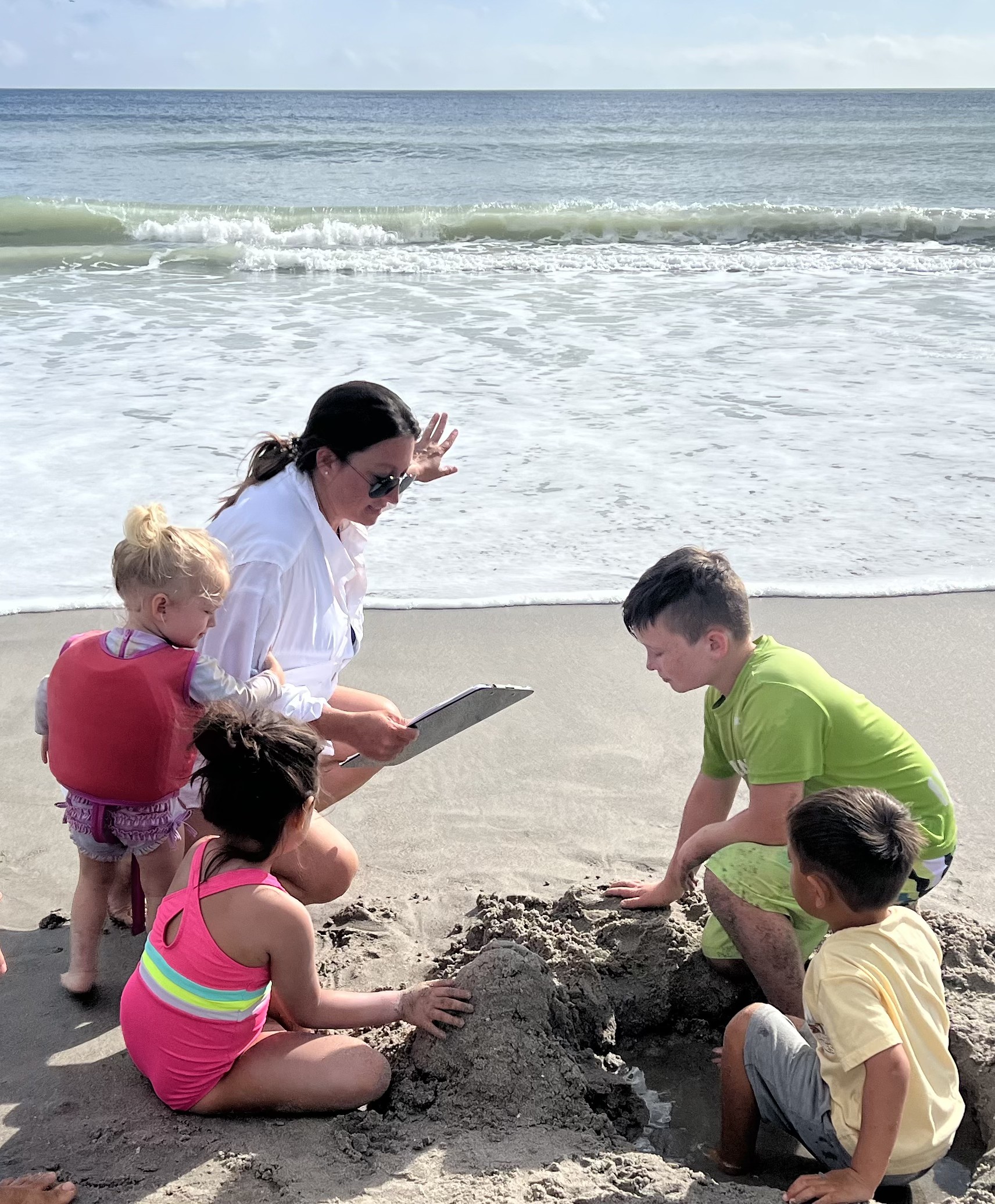
As a counselor with a research focus on developmental psychology, I’ve spent years studying how children grow — emotionally, socially, and cognitively. And one finding comes up again and again in the research, across disciplines, across decades: children who learn in nature do better. Not marginally. Significantly.
It’s not a trend. It’s not a philosophy. It’s how human brains were designed to learn.
What the Research Tells Us
A growing body of evidence shows that regular exposure to outdoor learning environments leads to measurable improvements in children’s development. Studies have found that children who learn outdoors show stronger attention spans, reduced anxiety, improved mood regulation, and greater intrinsic motivation to learn.
A landmark study from the University of Illinois found that time in natural settings significantly reduced symptoms of attention deficit in children — more effectively, in some cases, than indoor interventions. Researchers at the University of British Columbia found that students in outdoor education programs showed increased engagement, improved social skills, and greater enthusiasm for school.
And it’s not just academic. The American Academy of Pediatrics has consistently emphasized that unstructured outdoor play is essential for healthy physical, emotional, and cognitive development.
Why the Beach Changes Everything
Not all outdoor spaces are created equal. The beach offers something uniquely powerful: a dynamic, multisensory environment that changes every single day.
The tide comes in and goes out. Shells appear and disappear. Creatures emerge from the sand. The wind shifts. The waves change. For a child, this is a living laboratory — an environment that rewards observation, invites questions, and never runs out of things to discover.
When children study ecology by actually watching a tide pool cycle through its day, they don’t just learn the vocabulary — they feel it. When they measure wave intervals or track the movement of sand crabs, math and science stop being abstract. They become tools for understanding something real.
This is what educational researchers call “place-based learning” — education that is rooted in the local environment and community. And it works because it connects knowledge to lived experience in a way that textbooks simply cannot replicate.
The Social-Emotional Dimension
Here’s what often gets overlooked in conversations about outdoor education: nature doesn’t just teach children about the world. It teaches them about themselves.
In my work as a counselor, I’ve seen firsthand how natural environments create space for emotional regulation. The rhythm of waves. The openness of the sky. The sensory grounding of sand between toes. These aren’t just pleasant — they’re therapeutic. They calm the nervous system, reduce cortisol, and create the conditions for children to feel safe enough to learn, connect, and take risks.
For children who carry anxiety, stress, or sensory sensitivities, the outdoor classroom isn’t just an alternative — it can be transformative. The pressure of four walls, fluorescent lights, and 25 peers in a closed room is replaced by open air, natural light, and the gentle structure of a small group working together in a space that feels inherently safe.
Beyond Enrichment
Nature-based learning isn’t a supplement to “real” education. It is real education — arguably the most authentic form of it. For thousands of years, children learned by doing, exploring, and observing the world around them. The indoor classroom is the experiment. Nature is the original.
At Shoreline Scholars, we’re not rejecting academics. We’re putting them where they belong — in context. Math on the beach. Science in the tide pool. Writing inspired by what a child actually saw, touched, and felt that morning. Reading under a tree, not under a fluorescent tube.
The research supports it. The children confirm it. And every parent who has watched their child come alive outdoors already knows it.
The beach isn’t a break from learning. It’s where learning comes to life.
Rachel Glover is the founder of Shoreline Scholars and a Licensed Mental Health Counselor with a research focus on developmental psychology. Learn more about our approach on our Program page.