The classroom doesn’t always have four walls.
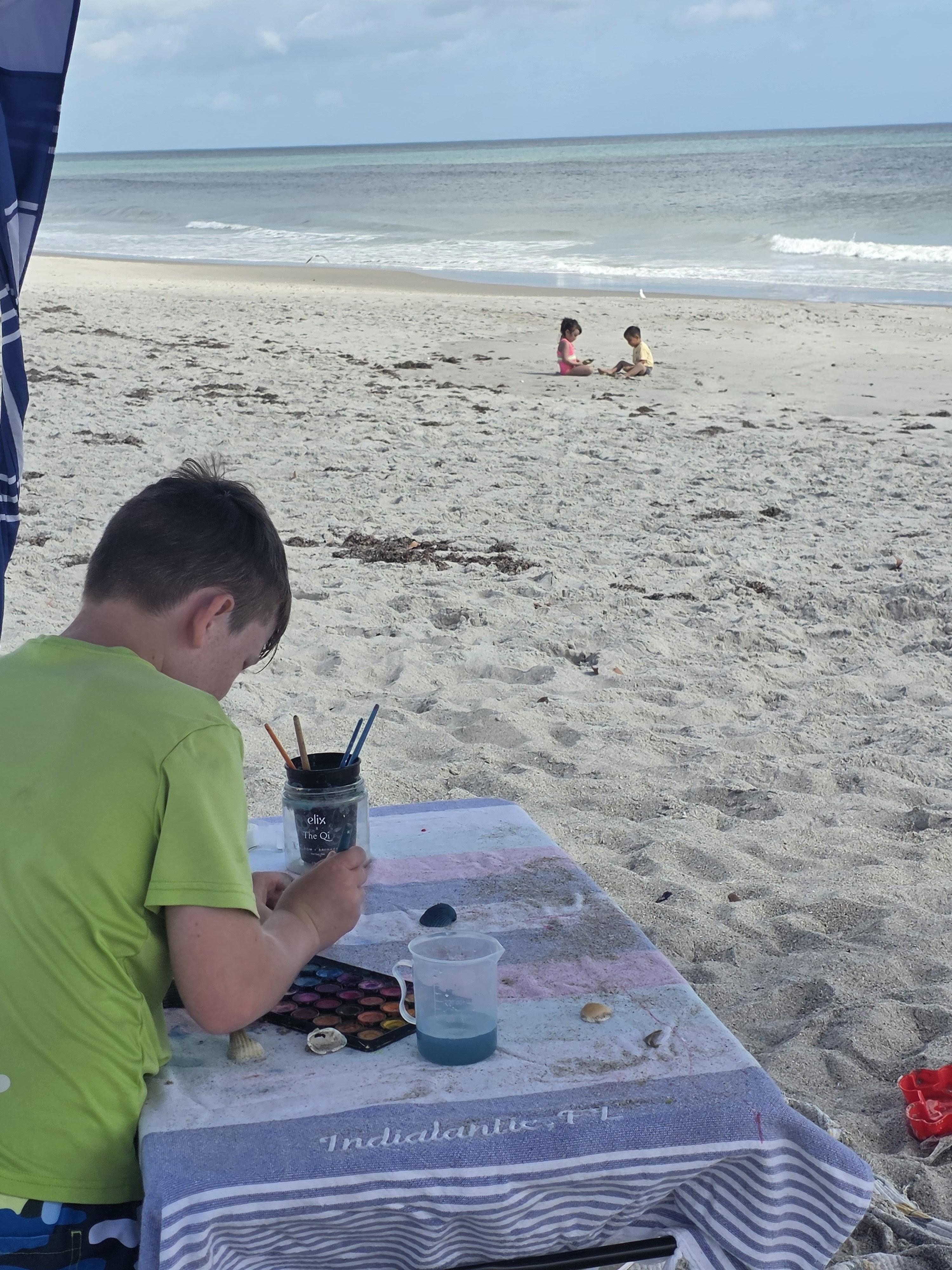
Sometimes it looks like this — a small table set up in the sand. A watercolor palette dusted with grains of the beach. Shells gathered from the morning tide. Paintbrushes dipped in seawater. And a child carefully studying the colors of the coast.
Just a few feet away, the Atlantic rolls in with quiet rhythm. Two younger children sit in the sand nearby, exploring their own discoveries — digging, talking, observing. The shoreline becomes a living laboratory.
This is Ocean Lab with Shoreline Scholars.
Out here, learning happens naturally. Children slow down. They notice things they might otherwise miss — the shape of a shell, the color of wet sand versus dry, the way waves erase footprints and redraw the shoreline.
Today’s exploration turned into an art and observation activity. Students collected shells and small stones, studying their shapes and textures before painting them. As they worked, conversations unfolded — the kind that can’t be planned, only invited:
Why are some shells smooth and others ridged?
Where did this one come from?
Why does the water change colors farther out?
These questions are the beginning of oceanography. But they are also the beginning of something bigger — a child learning to pay attention, to wonder aloud, to look more closely at the world right in front of them.
At Shoreline Scholars, we believe learning should engage the whole child. Curiosity, creativity, emotional connection to nature, and hands-on discovery all work together. When children learn in environments like the beach, science stops being abstract and becomes personal. The ocean isn’t just something they read about. It becomes something they know.
The act of painting shells becomes a lesson in observation. Sitting quietly with the horizon builds patience and focus. Working together on the sand fosters collaboration and care.
And perhaps most importantly, moments like this cultivate wonder. Because when a child feels connected to the ocean, they begin to care about it. They start to ask deeper questions. They want to protect it. They want to understand it.
And that’s where real learning begins.
This is Ocean Lab at Shoreline Scholars. Our next session begins May 5 at Nance Park. Learn more about the program or visit our Program page to see what we’re building.