There are secret spots in our neighborhood. Places most people drive past without a second look — a quiet stretch of riverbank, a rocky edge shaded by sea grape branches, a shallow pool where the water barely moves.
Children find them immediately.
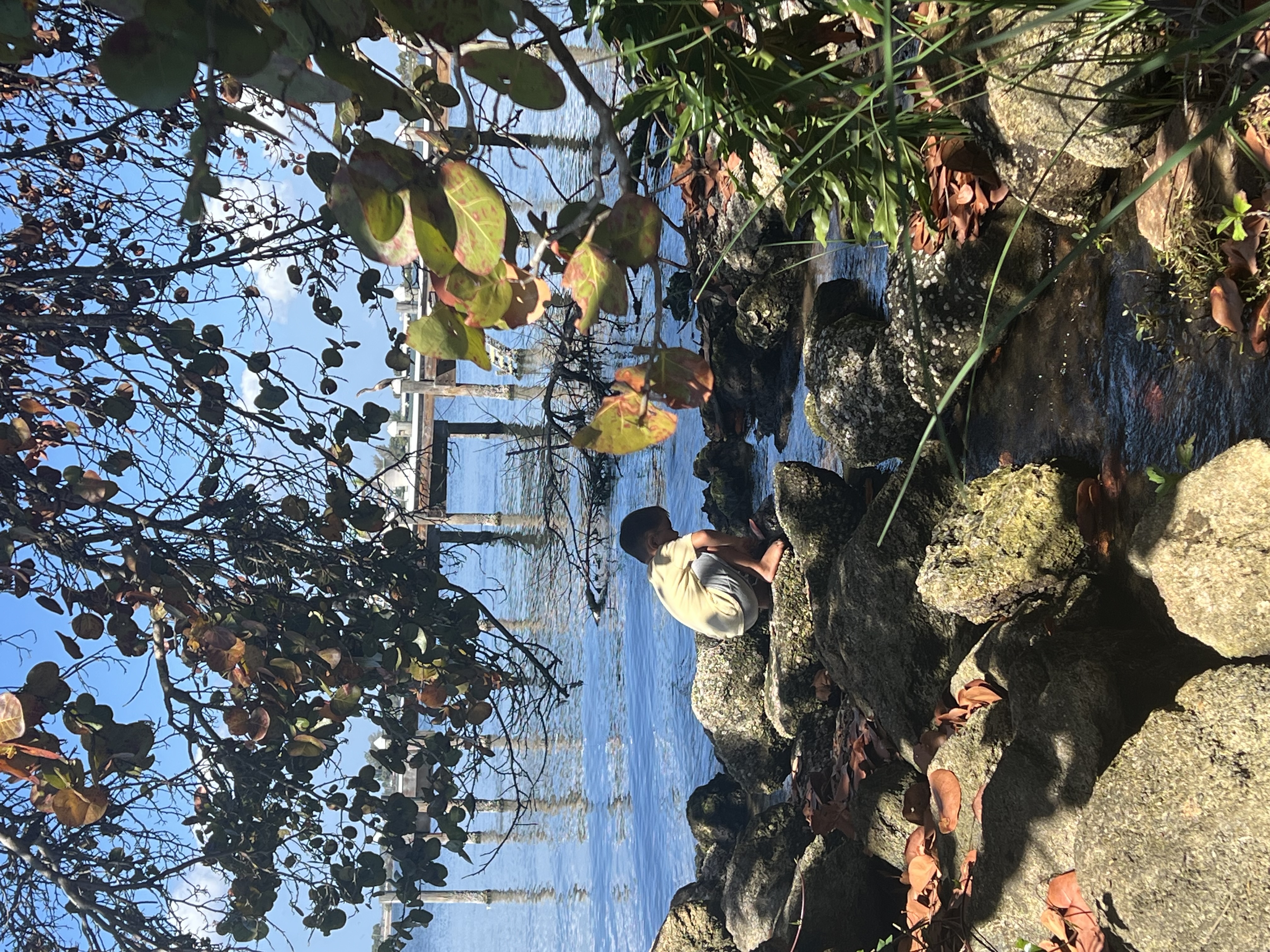
That’s what happened on a recent afternoon in Indialantic, just a short walk from the road. The Indian River was calm, the light was soft, and the rocks along the shore were full of small, living things.
John crouched low at the water’s edge, framed by overhanging branches, peering into the shallows. He moved carefully — lifting stones, watching what darted underneath, reaching into the cool water just to feel it. There was no assignment. No timer. Just a boy and a river and whatever he could find.
And he found plenty.
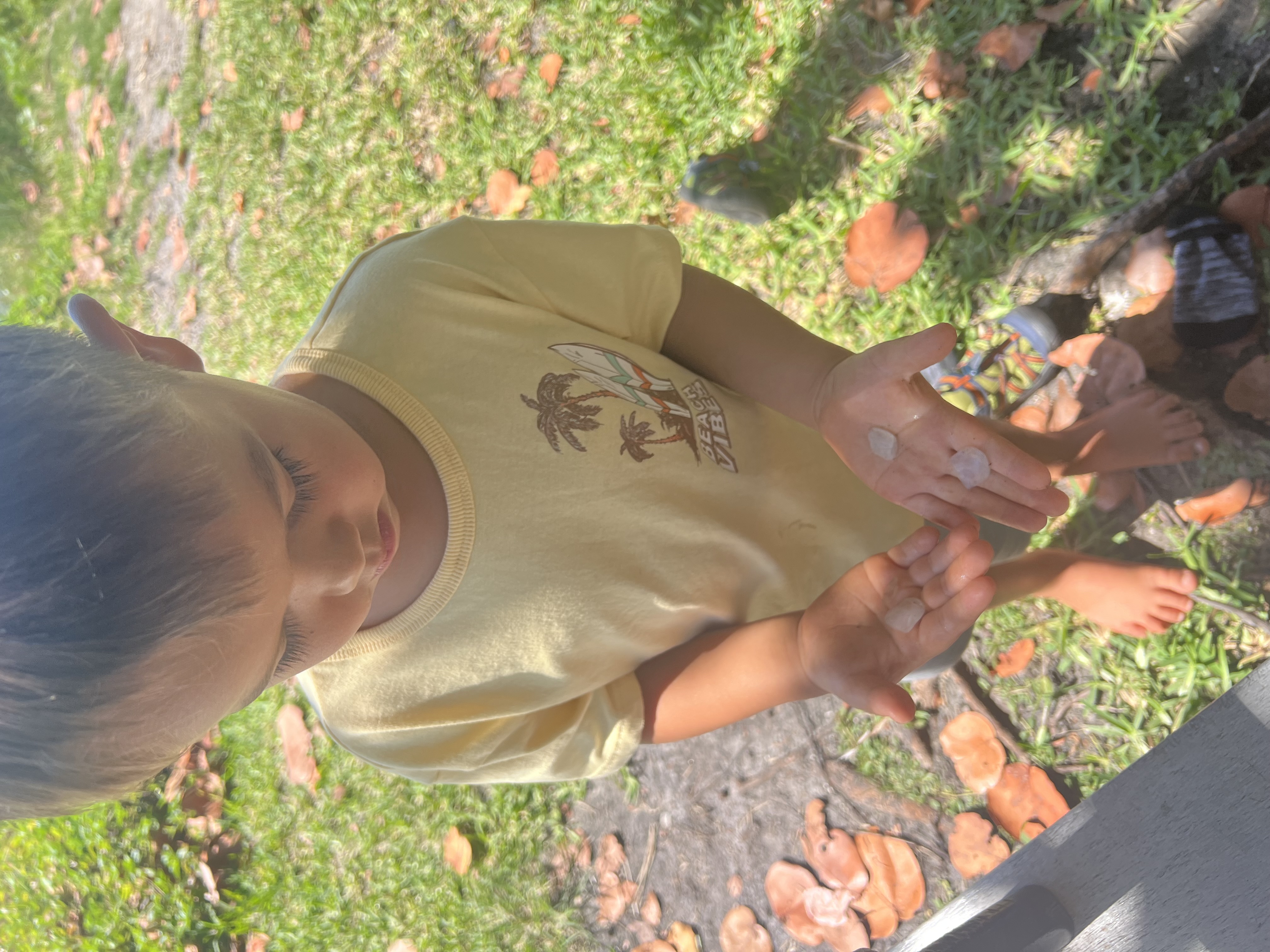
Sea snails. Smooth fragments of sea glass. Small shells worn down by salt and time. He held them in open palms like something worth protecting — studying each one, turning them over, comparing colors and textures. His face lit up the way it does when a child realizes the world is full of things worth noticing.
These are the moments we built Shoreline Scholars around.
Not a worksheet about ecosystems. Not a video of someone else’s field trip. The real thing — cool water, rough stone, a living river just minutes from home. A chance to slow down, breathe, and pay attention.
We are grateful for afternoons like this. For the Indian River, generous and patient. For the children who remind us that wonder doesn’t need to be manufactured. It just needs a little room.
Some of the best classrooms have no walls at all — just water, and light, and time.